Image
Date: October 30, 2026
Event: Supported Webinar
Time: 09:00-10:10 CEST
China's growing focus on food quality, safety and sustainability is driving increased interest in organic products. For European companies looking to enter the Chinese market, this raises important questions about certification requirements and the regulatory framework governing organic food products.
To help address these questions, the EU SME Centre and the Italian Chamber of Commerce in China are hosting a seminar on 30 October, both in Beijing and online.
The session will provide an overview of key market trends, market access conditions and China's organic certification procedures. Participants will gain practical insights into the regulatory landscape and key considerations for businesses assessing opportunities for their products in the Chinese market.
Whether you are already active in China or simply exploring the market, the seminar offers an opportunity to better understand the requirements and considerations relevant to organic food products.
Date: 30 October, 2026
Time: 09:00-10:10 CEST
Location: Beijing & Online
Date: October 30, 2026
Event: Supported Webinar
Time: 09:00–09:45 CEST
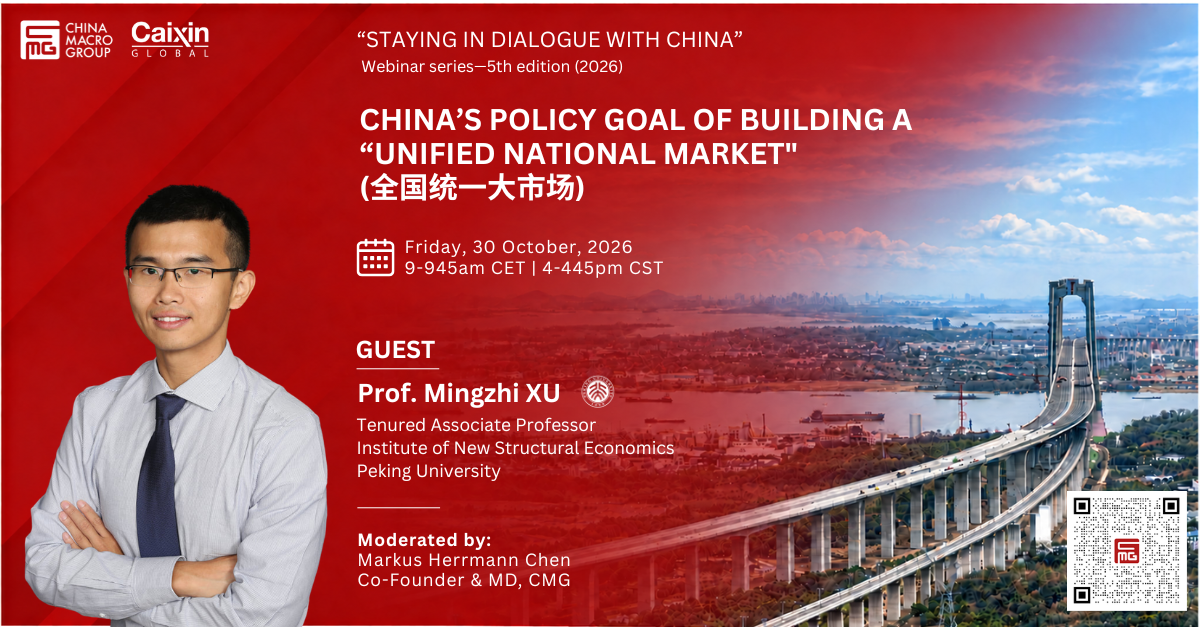
Join the upcoming “Staying in Dialogue with China” webinar on 30 October with Prof. Mingzhi Xu, Tenured Associate Professor at the Institute of New Structural Economics of Peking University (PKU) and a faculty member of the Yenching Academy.
For this session, China Macro Group focuses on China’s policy goal of building a “national unified market” (全国统一大市场), as a key issue shaping China’s political economy in 2026 based on priorities from the CCP Fourth Plenum (July 2024) and the Central Economic Work Conference in December 2025.
While the broad concept dates back several decades, it re-gained strategic importance across various iterations from 2018 (“strong domestic market” / 强大国内市场) to 2019 (“super-large scale market advantage” / 超大规模市场优势) to its eventual formalization as part of the 14th Five-Year-Plan (2021-2025) drafted in the first year of the Covid19 pandemic in 2020. After the pivotal “Third Plenum” in July 2024, we finally saw the NDRC publishing its key policy “Notice on Issuing the Guidelines for Building a Unified National Market (Trial), No. 1742” in December 2024.
More concretely, this webinar wants to discuss:
To discuss these questions, Markus Hermann Chen, Co-founder and Managing Director of China Macro Group will host Prof. Mingzhi Xu as guest speaker. Prof. Xu holds a Ph.D. in Economics from the University of California, Davis. During 2018 and 2019, he was a post-doctoral researcher at the National Bureau of Economic Research and a visiting researcher at Harvard Kennedy School (HKS), Harvard University. His research specialization includes international economics, industrial organization, economic development, consumer welfare, and infrastructure economics and financing. His research has examined topics including China’s trade liberalization, domestic sourcing, labour markets, and economic development.
Date: 30 October, 2026
Time: 09:00–09:45 CEST / 16:00-16:45 CST
Location: Online
Date: November 06, 2026
Event: Supported Webinar
Time: 09:00-10:55 CEST
For many Chinese consumers, online shopping is the preferred way to purchase products across a wide range of categories. As a result, livestreaming has become an important channel for brands looking to engage customers and drive sales. For European SMEs, understanding this fast-growing marketing format is a key step in evaluating opportunities in the Chinese market.
On 6 November, the EU SME Centre invite you to explore China’s livestreaming landscape, from the platforms and costs involved to the role of key opinion leaders (KOLs) and key opinion consumers (KOCs). The event will also examine the differences between livestreaming in China and livestreaming in Europe, the advertising regulations and legal considerations businesses need to know.
The webinar will provide practical knowledge to help businesses determine whether livestreaming could be a valuable addition to their China market strategy.
Date: 6 November, 2026
Time: 09:00–10:55 CEST
Location: Beijing & Online
Date: November 11, 2026
Event: Conference
Time: 09:00-13:30
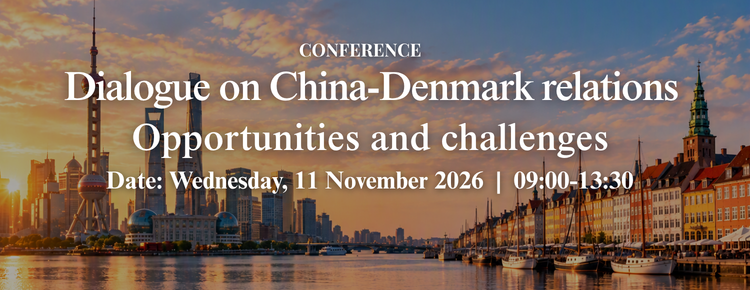
Exclusive conference - by invitation only
Against the backdrop of an evolving international landscape and the two countries’ respective policy priorities, the event will explore opportunities for cooperation, as well as the challenges shaping relations between China and Denmark.
The dialogue gathers business leaders and researchers for discussions on two main areas:
Bringing together perspectives from business and research, the event provides a forum for exchanging insights and discussing how evolving economic and policy priorities may influence future cooperation between China and Denmark.
The programme includes keynote speeches, followed by two panel discussions and Q&A sessions.
Date: November 11, 2026
Time: 09:00-13:30
Location: 2930 Gentofte
Organizers: The Embassy of the People's Republic of China in the Kingdom of Denmark and Danish Chinese Business Forum
NB: The conference is 'by invitation only'. If interested to learn more about the event, please contact Secretary General Hans Henrik Pontoppidan at hhp@dcbf.dk.
Date: November 18, 2026
Event: Supported Webinar
Time: 09:00-19:00 CEST
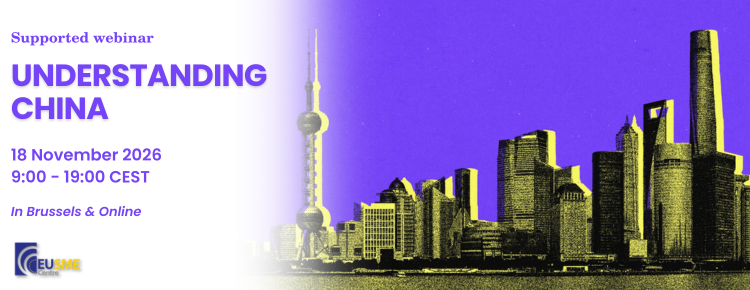
On 18 November 2026, the EU SME Centre will host the Understanding China Conference in Brussels and online. Bringing together policymakers from EU institutions, analysts, business leaders and industry experts, the conference will offer valuable insights into the latest developments shaping EU–China relations and the business environment for SMEs.
Through keynote speeches and expert panel discussions, participants will gain a better understanding of how evolving policies, market trends and wider developments may affect European SMEs operating in or engaging with China. The conference will also explore key areas relevant to companies looking to navigate the Chinese market, including changing consumer demographics and preferences, e-commerce, communication and marketing.
Date: 18 November, 2026
Time: 09:00–19:00 CEST
Location: Brussels & Online
Date: November 23, 2026
Event: Conference
Time: 10:00–16:00 (CST)
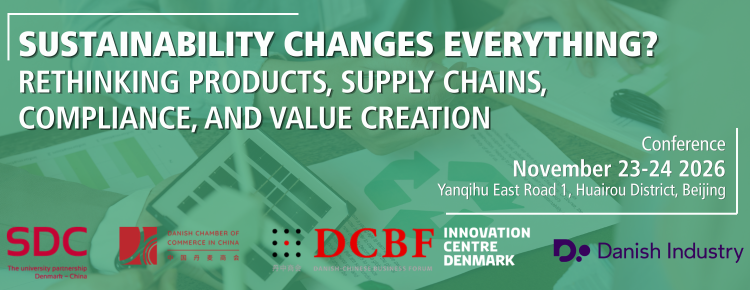
On 23–24 November 2026, Corporate Innovation Days 2026 will bring together companies, academics, researchers and students in Beijing for two days focused on sustainability and its impact on business.
The event will explore how sustainability is reshaping the way companies approach products, supply chains, compliance and value creation.
Across two days, participants can take part in keynotes, company pitches, panel discussions, workshops and networking, providing opportunities to exchange perspectives and connect across business and academia.
Speakers include representatives from:
Date: 23–24 November 2026
Venue: SDC Building, Yanqihu East Road 1, Huairou District, Beijing
Participation: Free of charge
Registration deadline: 10 November 2026
 Back
Back
Date: October 30, 2026
Event: Supported Webinar
Time: 09:00-10:10 CEST
China's growing focus on food quality, safety and sustainability is driving increased interest in organic products. For European companies looking to enter the Chinese market, this raises important questions about certification requirements and the regulatory framework governing organic food products.
To help address these questions, the EU SME Centre and the Italian Chamber of Commerce in China are hosting a seminar on 30 October, both in Beijing and online.
The session will provide an overview of key market trends, market access conditions and China's organic certification procedures. Participants will gain practical insights into the regulatory landscape and key considerations for businesses assessing opportunities for their products in the Chinese market.
Whether you are already active in China or simply exploring the market, the seminar offers an opportunity to better understand the requirements and considerations relevant to organic food products.
Date: 30 October, 2026
Time: 09:00-10:10 CEST
Location: Beijing & Online
Back
Date: October 30, 2026
Event: Supported Webinar
Time: 09:00–09:45 CEST
Join the upcoming “Staying in Dialogue with China” webinar on 30 October with Prof. Mingzhi Xu, Tenured Associate Professor at the Institute of New Structural Economics of Peking University (PKU) and a faculty member of the Yenching Academy.
For this session, China Macro Group focuses on China’s policy goal of building a “national unified market” (全国统一大市场), as a key issue shaping China’s political economy in 2026 based on priorities from the CCP Fourth Plenum (July 2024) and the Central Economic Work Conference in December 2025.
While the broad concept dates back several decades, it re-gained strategic importance across various iterations from 2018 (“strong domestic market” / 强大国内市场) to 2019 (“super-large scale market advantage” / 超大规模市场优势) to its eventual formalization as part of the 14th Five-Year-Plan (2021-2025) drafted in the first year of the Covid19 pandemic in 2020. After the pivotal “Third Plenum” in July 2024, we finally saw the NDRC publishing its key policy “Notice on Issuing the Guidelines for Building a Unified National Market (Trial), No. 1742” in December 2024.
More concretely, this webinar wants to discuss:
To discuss these questions, Markus Hermann Chen, Co-founder and Managing Director of China Macro Group will host Prof. Mingzhi Xu as guest speaker. Prof. Xu holds a Ph.D. in Economics from the University of California, Davis. During 2018 and 2019, he was a post-doctoral researcher at the National Bureau of Economic Research and a visiting researcher at Harvard Kennedy School (HKS), Harvard University. His research specialization includes international economics, industrial organization, economic development, consumer welfare, and infrastructure economics and financing. His research has examined topics including China’s trade liberalization, domestic sourcing, labour markets, and economic development.
Date: 30 October, 2026
Time: 09:00–09:45 CEST / 16:00-16:45 CST
Location: Online
Back
Date: November 06, 2026
Event: Supported Webinar
Time: 09:00-10:55 CEST
For many Chinese consumers, online shopping is the preferred way to purchase products across a wide range of categories. As a result, livestreaming has become an important channel for brands looking to engage customers and drive sales. For European SMEs, understanding this fast-growing marketing format is a key step in evaluating opportunities in the Chinese market.
On 6 November, the EU SME Centre invite you to explore China’s livestreaming landscape, from the platforms and costs involved to the role of key opinion leaders (KOLs) and key opinion consumers (KOCs). The event will also examine the differences between livestreaming in China and livestreaming in Europe, the advertising regulations and legal considerations businesses need to know.
The webinar will provide practical knowledge to help businesses determine whether livestreaming could be a valuable addition to their China market strategy.
Date: 6 November, 2026
Time: 09:00–10:55 CEST
Location: Beijing & Online
Back
Date: November 11, 2026
Event: Conference
Time: 09:00-13:30
Exclusive conference - by invitation only
Against the backdrop of an evolving international landscape and the two countries’ respective policy priorities, the event will explore opportunities for cooperation, as well as the challenges shaping relations between China and Denmark.
The dialogue gathers business leaders and researchers for discussions on two main areas:
Bringing together perspectives from business and research, the event provides a forum for exchanging insights and discussing how evolving economic and policy priorities may influence future cooperation between China and Denmark.
The programme includes keynote speeches, followed by two panel discussions and Q&A sessions.
Date: November 11, 2026
Time: 09:00-13:30
Location: 2930 Gentofte
Organizers: The Embassy of the People's Republic of China in the Kingdom of Denmark and Danish Chinese Business Forum
NB: The conference is 'by invitation only'. If interested to learn more about the event, please contact Secretary General Hans Henrik Pontoppidan at hhp@dcbf.dk.
Back
Date: November 18, 2026
Event: Supported Webinar
Time: 09:00-19:00 CEST
On 18 November 2026, the EU SME Centre will host the Understanding China Conference in Brussels and online. Bringing together policymakers from EU institutions, analysts, business leaders and industry experts, the conference will offer valuable insights into the latest developments shaping EU–China relations and the business environment for SMEs.
Through keynote speeches and expert panel discussions, participants will gain a better understanding of how evolving policies, market trends and wider developments may affect European SMEs operating in or engaging with China. The conference will also explore key areas relevant to companies looking to navigate the Chinese market, including changing consumer demographics and preferences, e-commerce, communication and marketing.
Date: 18 November, 2026
Time: 09:00–19:00 CEST
Location: Brussels & Online
Back
Date: November 23, 2026
Event: Conference
Time: 10:00–16:00 (CST)
On 23–24 November 2026, Corporate Innovation Days 2026 will bring together companies, academics, researchers and students in Beijing for two days focused on sustainability and its impact on business.
The event will explore how sustainability is reshaping the way companies approach products, supply chains, compliance and value creation.
Across two days, participants can take part in keynotes, company pitches, panel discussions, workshops and networking, providing opportunities to exchange perspectives and connect across business and academia.
Speakers include representatives from:
Date: 23–24 November 2026
Venue: SDC Building, Yanqihu East Road 1, Huairou District, Beijing
Participation: Free of charge
Registration deadline: 10 November 2026
Date: October 09, 2025
Time: 9:00-9:45 CEST - 15:00-15:45 CST
Event: Supported Webinar
For the fourth webinar in the 2025 webinar series "Staying in Dialogue with China", China Macro Group will be joined by Prof. Yu Tiejun, President of the Institute of International and Strategic Studies (IISS), and Professor at the School of International Studies (SIS) at Peking University. As one of China's leading IR scholars, Prof. Yu is an influential domestic voice active both in public discourse and in the Chinese foreign policy community. In addition, his academic stints at MIT, Stanford, Harvard, and the University of Tokyo highlights his experiences engaging internationally.
About the Webinar
This webinar will offer a broad analysis of China’s foreign policy landscape, strategic priorities, and key risks ahead of the CCP’s “Fourth Plenum,” expected in October to set the outline of the 15th Five-Year Plan. Furthermore, China Macro Group will provide up-to-date insights to assist listeners and their businesses in developing informed approaches to strategy, planning, resilience, and investment decisions.
The following key topics will be covered:
Take this opportunity to gain the latest insights ahead of China’s 15th Five-Year Plan through this timely webinar, and receive answers to your questions. Click here to read more and sign up!
About the Webinar Series:
This webinar is part of the webinar series 'Staying in Dialogue with China'. The series will bring you six webinars with distinguished China-based experts, concentrated between February and December 2025.
"Staying in dialogue with China" is organized and hosted by China Macro Group (CMG), with Caixin Global as Anchor Partner, in cooperation with China Europe International Business School (CEIBS), Chinaforum Bayern, Swissmem, Danish-Chinese Business Forum (DCBF), SwissCham China, the Stein am Rhein Symposium (stars), Sweden-China Trade Council (SCTC), Norwegian Business Association China (NBA China), EuroCham Singapore and China-Britain Business Council.
Date: August 26, 2025
Time: 13:00-15:00 CET
Event: Conference
DCBF is pleased to announce the second event in our Risk Seminar Series - this edition will explore the strategic implications of the growing decoupling between corporate headquarters (HQs) and China operations.
Recent reports highlight a growing operational disconnect between Danish headquarters (HQs) and their China subsidiaries – driven by localization, regulatory pressures, and reduced cross-border mobility. This misalignment is undermining collaboration, responsiveness, and global competitiveness.
About the event
Drawing on insights from senior executives at Coloplast and Danfoss, this seminar examines the risks of disengagement and siloed operations and discusses how Danish MNCs can recalibrate their strategies to strengthen cross-border collaboration, enhance trust, and maintain operational coherence.
At the heart of the discussion lies a fundamental question: What level of coordination, integration, and mutual understanding is required to ensure that HQs remain informed and agile, while enabling China-based teams to act effectively and autonomously?
The event will feature case examples, interactive dialogue, and practical reflections on:
For more information and registration, please send us a message at info@dcbf.dk.
About the Risk Seminar Series
Since COVID-19, companies have become increasingly aware of the organizational risks involved in operating globally, particularly in China. To support multinational companies in addressing these challenges, DCBF will host three targeted events in 2025, structured to progress from the micro to the macro level.
Date: July 10, 2025
Time: 9:00-9:45 CEST - 15:00-15:45 CST
Event: Supported Webinar
About the Flash Webinar:
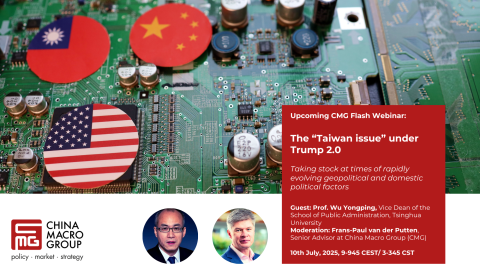
Before the summer holidays officially takes a hold on us, China Macro Group (CMG) will host a flash webinar on Thursday, July 10th 2025, 9 am CEST, to discuss the “Taiwan issue” under Trump 2.0.
From declarations at The Hague NATO Summit and Taiwan President Lai’s dialed-up rhetoric to the CCP’s new concept of “integrated or fused development” of Fujian province with Taiwan, TSMC’s new investment in the US, former Taiwan President Ma Ying-jeou’s track 2.0 diplomacy, and persisting PLA exercises around Taiwan:
What are the most important recent developments for European businesses doing cross-strait business?
What significance do these developments carry for the stability of cross-strait relations?
Which are the key analytical indicators to watch moving forward?
CMG Senior Advisor Frans-Paul van der Putten will moderate the webinar with Prof. Wu Yongping, Vice Dean of the School of Public Administration at Tsinghua University to provide in-depth analysis and expert perspectives on this complex and timely topic for interested participants.
This webinar will analyze and discuss key aspects of the evolving yet ever-complex “Taiwan issue” to support European and international business’ monitoring efforts and strategic decision-making regarding China and the Chinese market.
Take the opportunity to listen in and ask your questions to Vice-Dean Wu Yongping. Members of DCBF can register for free - Click here to sign up!
About China Macro Group:
CMG is a specialized European management consulting and research firm providing original, fact-based and calibrated China research and analysis to advise European corporate, investment and public sectors on strategic decision-making related to China and the Chinese market. CMG specializes in addressing management challenges shaped by developments in China’s political economy, international trade and market environment, ranging from strategy, footprint/organizational design, HQ-subsidiary interactions to strategic partnerships and negotiations.
In their research and analytical methodology, CMG integrates the four disciplines of: business/strategic management, public policy, macro-economy and international affairs.
Click here to learn more about CMG, and screen through their insightful primers and analyses (members of DCBF can read them for free).
Date: June 20, 2025
Time: 9:00-9:45 CEST - 15:00-15:45 CST
Event: Supported Webinar
In the third session of the 2025 webinar series “Staying in Dialogue with China”, which is dedicated to the theme of China's next and upcoming 15th Five-Year-Plan (2026-2030), Markus Herrmann Chen, Co-Founder and Managing Director, China Macro Group (CMG) will be talking to Zhang Dandan, Professor in Economics and Deputy Dean of the National School of Development (NSD) of Peking University.
Members of DCBF can register for free - Click here to read more and sign up!
About the Webinar
Amid China’s continuously difficult post-Covid economic recovery as well as persisting structural issues such as the real estate market, industrial overcapacity and local government debt, this webinar deliberately takes the “long view”, providing a 10-year outlook and imagining China in 2035 as the next key modernization milestone – the mid-term goal announced as part of the 14th Five-Year-Plan in March 2021. This has been only the second time a regular Five-Year-Plan takes a planning horizon beyond the regular five years, the previous one being the 6th Five-Year-Plan (1981-1985) which proposed goals for the four ensuing Five-Year-Plan periods until the end of the century with the goal of quadrupling China’s GDP.
By 2035, and by accomplishing the goals of the 15th and 16th Five-Year-Plans, Chinese planners seek to achieve the “basic socialist modernization” (基本实现社会主义现代化), which in its core wants to – again – double China’s GDP, over the period from 2020 to 2035, which assumes a sustained year-on-year average real growth of 4.7% GDP, plus increase the share of China’s middle income group from 35% to 50% as some of its most important policy goals.
The following key questions will be explored:
Take the opportunity to listen in and ask your questions to Vice-Dean Zhang Dandan.
About the Webinar Series:
This webinar is part of the webinar series 'Staying in Dialogue with China'. The series will bring you six webinars with distinguished China-based experts, concentrated between February and December 2025.
'Staying in dialogue with China' is organized and hosted by China Macro Group (CMG), with Caixin Global as Anchor Partner, in cooperation with China Europe International Business School (CEIBS), Chinaforum Bayern, Swissmem, Danish-Chinese Business Forum (DCBF), SwissCham China, the Stein am Rhein Symposium (stars), Sweden-China Trade Council (SCTC), Norwegian Business Association China (NBA China), Danish Chamber of Commerce in China (DCCC), EuroCham Singapore and China-Britain Business Council.
Date: June 17, 2025
Time: 14:00-16:00 CET
Event: Conference
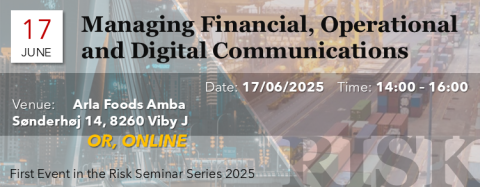
Danish-Chinese Business Forum invites you to the opening event of a high-level seminar series on risk management.
About the event
As Danish companies evaluate the risks of operating in - and staying out of - China, this hybrid seminar will address critical aspects of financial, operational, and digital risk.
Attend in person in Aarhus, or join us online, to explore how communication structures can be strengthened to improve risk management, data security and corporate accountability.
The event is relevant for all professionals across sectors navigating organizational or multinational risk exposure in China.
Our speakers will present practical insights backed by experience and actionable case studies illustrating how inadequate operational systems and informal communication can result in data loss and ownership issues, and how supply chain audits can lead to improved compliance, alongside other examples.
For the first event at Arla Foods in Aarhus, we are pleased to welcome three expert speakers with firsthand experience in managing risk in China:
For more information and registration, please send us a message at info@dcbf.dk
About the Risk Seminar Series
Since COVID-19, companies have become increasingly aware of the organizational risks involved in operating globally, particularly in China. To support multinational companies in addressing these challenges, DCBF will host three targeted events in 2025, structured to progress from the micro to the macro level.
Date: April 23, 2025
Time: 9:00-9:45 CEST - 16:00-16:45 CST
Event: Supported Webinar
In the second session of the 2025 webinar series “Staying in Dialogue with China”, Markus Herrmann Chen, Co-Founder and Managing Director, China Macro Group (CMG) will be talking to Zhu Guangyao. Vice Chairman of CCIEE, and former Vice Minister of Finance, about China’s next and upcoming 15th Five-year Plan (2026-2030).
Members of DCBF can register for free - Click here to read more and sign up!
About the Webinar Series:
This webinar is part of the webinar series 'Staying in Dialogue with China'. The series will bring you six webinars with distinguished China-based experts, concentrated between February and December 2025.
'Staying in dialogue with China' is organized and hosted by China Macro Group (CMG), with Caixin Global as Anchor Partner, in cooperation with China Europe International Business School (CEIBS), Chinaforum Bayern, Swissmem, Danish-Chinese Business Forum (DCBF), SwissCham China, the Stein am Rhein Symposium (stars), Sweden-China Trade Council (SCTC), Norwegian Business Association China (NBA China), Danish Chamber of Commerce in China (DCCC), and EuroCham Singapore.
About the Webinar:
Against the backdrop of the 15th Five-Year-Plan (2026-2030) being drafted these months, this webinar wants to take stock of the implementations of the 14th Five-Year-Plan (2021-2025) to date, which was drafted in the first year of the Covid pandemic in 2020, endorsed by the NPC in 2021 and is now in its fifth and last year of execution.
This time period eventually witnessed, among many more, China’s real estate crisis, the 20th Party Congress, ASEAN becoming China’s largest trading partner, an aggravated level of insufficient demand and overcapacity in China’s economy, the end of Covid-related restrictions and the re-opening of its borders, Russia launching its war against Ukraine, the peaking of China’s population, new market governance dynamics shifting from tensions to reconciliation with China’s private sector, two US presidents, and finally the “Deep Seek” moment.
CMG wants to discuss the following key topics with their esteemed guest:
The strategic role and impact of the Dual Circulation policy concept
Highlight key challenges and key policymaking actions under the 14th Five-Year-Plan
Reform announcements at the “Third Plenum” (July 2024) and their implementation
China’s evolving external environment, incl. Trump 2.0 and US-China relations
China’s technological momentum, dependencies and ambitions
State and outlook of China’s post-Covid economic recovery
Changing premises and external factors for the 15th Five-Year-Plan
How are “supply” vs “demand” side each seen strategically by the Chinese leadership?
Are there structural levers or quick-wins to unleash more domestic demand to urgently and effectively revitalize the economy?
What is the role of China’s social security system to help unleash the domestic demand?
What is the link between domestic demand boost and “common prosperity”?
Join this wide-ranging discussion to get a strategic snapshot from a senior Chinese policymaker’s unique vantage point of where China’s development and its economy stand, as well as the key challenges and opportunities as seen by Beijing.
Date: April 09, 2025
Time: 14:20 - 19:00 CEST (Registration starts at 14:00)
Event: Annual General Meeting
Venue: FOSS Innovation Center.
About the Event
Danish-Chinese Business Forum is pleased to annouce this year's Annual General Meeting (AGM), which will take place 9th of April 2025. The AGM will be hosted by FOSS Analytical A/S at the FOSS Innovation Centre in Hillerød.
We are pleased to announce our two distinguished keynote speakers:
Peter Foss, Chairman of the Board of Directors at FOSS Group, and Tom Behrens-Sørensen, Chairman of Danish-Chinese Business Forum will provide the welcome speeches.
This AGM will be particularly significant as it marks the 20th anniversary of the Danish-Chinese Business Forum's establishment - a milestone in fostering collaboration and growth. The central theme of this year's AGM is "Reflections and Future Trends: Mapping China's Next 20 Years."
(Only for Members of DCBF)
Date: February 26, 2025
Time: 14:00-15:30
Event: Webinar
About the Event
Trade tensions, an intense tech race and shifting global dynamics continue to impact businesses and economies worldwide.
How will China respond to potential changes in U.S. policy and the global landscape?
Can we expect changes on the Taiwan issue?
What can companies anticipate for China’s policy agenda and economic outlook in 2025?
What trade-offs might occurs from siloing and diversification efforts for foreign businesses in China?
Understanding these shifts is essential for businesses looking to navigate the complexities of the Chinese market and its broader global impact.
Join us for this Signature Webinar, where our most esteemed speakers will provide key insights into business, economic trends, and geopolitical developments shaping China in the coming year.
Date: February 26, 2025
Time: 9:00-9:45 CET 16:00-16:45 CST
Event: Supported Webinar
This webinar is part of the webinar series 'Staying in Dialogue with China'. The series will bring you six webinars with distinguished China-based experts, concentrated between February and December 2025.
'Staying in Dialogue with China' is organized and hosted by China Macro Group (CMG), with Caixin Global as Anchor Partner, in cooperation with the China Europe International Business School (CEIBS), Chinaforum Bayern, Swissmem, the Norwegian Business Association China (NBA China), the Danish-Chinese Business Forum (DCBF) and the Sweden-China Trade Council (SCTC).
The first webinar of the 2025 edition of the “Staying in Dialogue with China” webinar series is dedicated to the theme of China’s next and upcoming 15th Five-Year-Plan (2026-2030). Markus Hermann Chen, Co-Founder and Managing Director of CMG, will talk to Prof. Da Wei, Director of the Center for International Security and Strategy (CISS) and Professor of International Relations at Tsinghua University in Beijing.
Key themes to discuss with Prof. Da include:
Take the opportunity to listen in and ask your questions to Prof. Da.
Members of DCBF can register for free - Click here to read more and sign up!
Back
Date: October 09, 2025
Event: Supported Webinar
For the fourth webinar in the 2025 webinar series "Staying in Dialogue with China", China Macro Group will be joined by Prof. Yu Tiejun, President of the Institute of International and Strategic Studies (IISS), and Professor at the School of International Studies (SIS) at Peking University. As one of China's leading IR scholars, Prof. Yu is an influential domestic voice active both in public discourse and in the Chinese foreign policy community. In addition, his academic stints at MIT, Stanford, Harvard, and the University of Tokyo highlights his experiences engaging internationally.
About the Webinar
This webinar will offer a broad analysis of China’s foreign policy landscape, strategic priorities, and key risks ahead of the CCP’s “Fourth Plenum,” expected in October to set the outline of the 15th Five-Year Plan. Furthermore, China Macro Group will provide up-to-date insights to assist listeners and their businesses in developing informed approaches to strategy, planning, resilience, and investment decisions.
The following key topics will be covered:
Take this opportunity to gain the latest insights ahead of China’s 15th Five-Year Plan through this timely webinar, and receive answers to your questions. Click here to read more and sign up!
About the Webinar Series:
This webinar is part of the webinar series 'Staying in Dialogue with China'. The series will bring you six webinars with distinguished China-based experts, concentrated between February and December 2025.
"Staying in dialogue with China" is organized and hosted by China Macro Group (CMG), with Caixin Global as Anchor Partner, in cooperation with China Europe International Business School (CEIBS), Chinaforum Bayern, Swissmem, Danish-Chinese Business Forum (DCBF), SwissCham China, the Stein am Rhein Symposium (stars), Sweden-China Trade Council (SCTC), Norwegian Business Association China (NBA China), EuroCham Singapore and China-Britain Business Council.
Back
Date: August 26, 2025
Event: Conference
DCBF is pleased to announce the second event in our Risk Seminar Series - this edition will explore the strategic implications of the growing decoupling between corporate headquarters (HQs) and China operations.
Recent reports highlight a growing operational disconnect between Danish headquarters (HQs) and their China subsidiaries – driven by localization, regulatory pressures, and reduced cross-border mobility. This misalignment is undermining collaboration, responsiveness, and global competitiveness.
About the event
Drawing on insights from senior executives at Coloplast and Danfoss, this seminar examines the risks of disengagement and siloed operations and discusses how Danish MNCs can recalibrate their strategies to strengthen cross-border collaboration, enhance trust, and maintain operational coherence.
At the heart of the discussion lies a fundamental question: What level of coordination, integration, and mutual understanding is required to ensure that HQs remain informed and agile, while enabling China-based teams to act effectively and autonomously?
The event will feature case examples, interactive dialogue, and practical reflections on:
For more information and registration, please send us a message at info@dcbf.dk.
About the Risk Seminar Series
Since COVID-19, companies have become increasingly aware of the organizational risks involved in operating globally, particularly in China. To support multinational companies in addressing these challenges, DCBF will host three targeted events in 2025, structured to progress from the micro to the macro level.
Back
Date: July 10, 2025
Event: Supported Webinar
About the Flash Webinar:
Before the summer holidays officially takes a hold on us, China Macro Group (CMG) will host a flash webinar on Thursday, July 10th 2025, 9 am CEST, to discuss the “Taiwan issue” under Trump 2.0.
From declarations at The Hague NATO Summit and Taiwan President Lai’s dialed-up rhetoric to the CCP’s new concept of “integrated or fused development” of Fujian province with Taiwan, TSMC’s new investment in the US, former Taiwan President Ma Ying-jeou’s track 2.0 diplomacy, and persisting PLA exercises around Taiwan:
What are the most important recent developments for European businesses doing cross-strait business?
What significance do these developments carry for the stability of cross-strait relations?
Which are the key analytical indicators to watch moving forward?
CMG Senior Advisor Frans-Paul van der Putten will moderate the webinar with Prof. Wu Yongping, Vice Dean of the School of Public Administration at Tsinghua University to provide in-depth analysis and expert perspectives on this complex and timely topic for interested participants.
This webinar will analyze and discuss key aspects of the evolving yet ever-complex “Taiwan issue” to support European and international business’ monitoring efforts and strategic decision-making regarding China and the Chinese market.
Take the opportunity to listen in and ask your questions to Vice-Dean Wu Yongping. Members of DCBF can register for free - Click here to sign up!
About China Macro Group:
CMG is a specialized European management consulting and research firm providing original, fact-based and calibrated China research and analysis to advise European corporate, investment and public sectors on strategic decision-making related to China and the Chinese market. CMG specializes in addressing management challenges shaped by developments in China’s political economy, international trade and market environment, ranging from strategy, footprint/organizational design, HQ-subsidiary interactions to strategic partnerships and negotiations.
In their research and analytical methodology, CMG integrates the four disciplines of: business/strategic management, public policy, macro-economy and international affairs.
Click here to learn more about CMG, and screen through their insightful primers and analyses (members of DCBF can read them for free).
Back
Date: June 20, 2025
Event: Supported Webinar
In the third session of the 2025 webinar series “Staying in Dialogue with China”, which is dedicated to the theme of China's next and upcoming 15th Five-Year-Plan (2026-2030), Markus Herrmann Chen, Co-Founder and Managing Director, China Macro Group (CMG) will be talking to Zhang Dandan, Professor in Economics and Deputy Dean of the National School of Development (NSD) of Peking University.
Members of DCBF can register for free - Click here to read more and sign up!
About the Webinar
Amid China’s continuously difficult post-Covid economic recovery as well as persisting structural issues such as the real estate market, industrial overcapacity and local government debt, this webinar deliberately takes the “long view”, providing a 10-year outlook and imagining China in 2035 as the next key modernization milestone – the mid-term goal announced as part of the 14th Five-Year-Plan in March 2021. This has been only the second time a regular Five-Year-Plan takes a planning horizon beyond the regular five years, the previous one being the 6th Five-Year-Plan (1981-1985) which proposed goals for the four ensuing Five-Year-Plan periods until the end of the century with the goal of quadrupling China’s GDP.
By 2035, and by accomplishing the goals of the 15th and 16th Five-Year-Plans, Chinese planners seek to achieve the “basic socialist modernization” (基本实现社会主义现代化), which in its core wants to – again – double China’s GDP, over the period from 2020 to 2035, which assumes a sustained year-on-year average real growth of 4.7% GDP, plus increase the share of China’s middle income group from 35% to 50% as some of its most important policy goals.
The following key questions will be explored:
Take the opportunity to listen in and ask your questions to Vice-Dean Zhang Dandan.
About the Webinar Series:
This webinar is part of the webinar series 'Staying in Dialogue with China'. The series will bring you six webinars with distinguished China-based experts, concentrated between February and December 2025.
'Staying in dialogue with China' is organized and hosted by China Macro Group (CMG), with Caixin Global as Anchor Partner, in cooperation with China Europe International Business School (CEIBS), Chinaforum Bayern, Swissmem, Danish-Chinese Business Forum (DCBF), SwissCham China, the Stein am Rhein Symposium (stars), Sweden-China Trade Council (SCTC), Norwegian Business Association China (NBA China), Danish Chamber of Commerce in China (DCCC), EuroCham Singapore and China-Britain Business Council.
Back
Date: June 17, 2025
Event: Conference
Danish-Chinese Business Forum invites you to the opening event of a high-level seminar series on risk management.
About the event
As Danish companies evaluate the risks of operating in - and staying out of - China, this hybrid seminar will address critical aspects of financial, operational, and digital risk.
Attend in person in Aarhus, or join us online, to explore how communication structures can be strengthened to improve risk management, data security and corporate accountability.
The event is relevant for all professionals across sectors navigating organizational or multinational risk exposure in China.
Our speakers will present practical insights backed by experience and actionable case studies illustrating how inadequate operational systems and informal communication can result in data loss and ownership issues, and how supply chain audits can lead to improved compliance, alongside other examples.
For the first event at Arla Foods in Aarhus, we are pleased to welcome three expert speakers with firsthand experience in managing risk in China:
For more information and registration, please send us a message at info@dcbf.dk
About the Risk Seminar Series
Since COVID-19, companies have become increasingly aware of the organizational risks involved in operating globally, particularly in China. To support multinational companies in addressing these challenges, DCBF will host three targeted events in 2025, structured to progress from the micro to the macro level.
Back
Date: April 23, 2025
Event: Supported Webinar
In the second session of the 2025 webinar series “Staying in Dialogue with China”, Markus Herrmann Chen, Co-Founder and Managing Director, China Macro Group (CMG) will be talking to Zhu Guangyao. Vice Chairman of CCIEE, and former Vice Minister of Finance, about China’s next and upcoming 15th Five-year Plan (2026-2030).
Members of DCBF can register for free - Click here to read more and sign up!
About the Webinar Series:
This webinar is part of the webinar series 'Staying in Dialogue with China'. The series will bring you six webinars with distinguished China-based experts, concentrated between February and December 2025.
'Staying in dialogue with China' is organized and hosted by China Macro Group (CMG), with Caixin Global as Anchor Partner, in cooperation with China Europe International Business School (CEIBS), Chinaforum Bayern, Swissmem, Danish-Chinese Business Forum (DCBF), SwissCham China, the Stein am Rhein Symposium (stars), Sweden-China Trade Council (SCTC), Norwegian Business Association China (NBA China), Danish Chamber of Commerce in China (DCCC), and EuroCham Singapore.
About the Webinar:
Against the backdrop of the 15th Five-Year-Plan (2026-2030) being drafted these months, this webinar wants to take stock of the implementations of the 14th Five-Year-Plan (2021-2025) to date, which was drafted in the first year of the Covid pandemic in 2020, endorsed by the NPC in 2021 and is now in its fifth and last year of execution.
This time period eventually witnessed, among many more, China’s real estate crisis, the 20th Party Congress, ASEAN becoming China’s largest trading partner, an aggravated level of insufficient demand and overcapacity in China’s economy, the end of Covid-related restrictions and the re-opening of its borders, Russia launching its war against Ukraine, the peaking of China’s population, new market governance dynamics shifting from tensions to reconciliation with China’s private sector, two US presidents, and finally the “Deep Seek” moment.
CMG wants to discuss the following key topics with their esteemed guest:
The strategic role and impact of the Dual Circulation policy concept
Highlight key challenges and key policymaking actions under the 14th Five-Year-Plan
Reform announcements at the “Third Plenum” (July 2024) and their implementation
China’s evolving external environment, incl. Trump 2.0 and US-China relations
China’s technological momentum, dependencies and ambitions
State and outlook of China’s post-Covid economic recovery
Changing premises and external factors for the 15th Five-Year-Plan
How are “supply” vs “demand” side each seen strategically by the Chinese leadership?
Are there structural levers or quick-wins to unleash more domestic demand to urgently and effectively revitalize the economy?
What is the role of China’s social security system to help unleash the domestic demand?
What is the link between domestic demand boost and “common prosperity”?
Join this wide-ranging discussion to get a strategic snapshot from a senior Chinese policymaker’s unique vantage point of where China’s development and its economy stand, as well as the key challenges and opportunities as seen by Beijing.
Back
Date: April 09, 2025
Event: Annual General Meeting
Venue: FOSS Innovation Center.
About the Event
Danish-Chinese Business Forum is pleased to annouce this year's Annual General Meeting (AGM), which will take place 9th of April 2025. The AGM will be hosted by FOSS Analytical A/S at the FOSS Innovation Centre in Hillerød.
We are pleased to announce our two distinguished keynote speakers:
Peter Foss, Chairman of the Board of Directors at FOSS Group, and Tom Behrens-Sørensen, Chairman of Danish-Chinese Business Forum will provide the welcome speeches.
This AGM will be particularly significant as it marks the 20th anniversary of the Danish-Chinese Business Forum's establishment - a milestone in fostering collaboration and growth. The central theme of this year's AGM is "Reflections and Future Trends: Mapping China's Next 20 Years."
(Only for Members of DCBF)
Back
Date: February 26, 2025
Event: Webinar
About the Event
Trade tensions, an intense tech race and shifting global dynamics continue to impact businesses and economies worldwide.
How will China respond to potential changes in U.S. policy and the global landscape?
Can we expect changes on the Taiwan issue?
What can companies anticipate for China’s policy agenda and economic outlook in 2025?
What trade-offs might occurs from siloing and diversification efforts for foreign businesses in China?
Understanding these shifts is essential for businesses looking to navigate the complexities of the Chinese market and its broader global impact.
Join us for this Signature Webinar, where our most esteemed speakers will provide key insights into business, economic trends, and geopolitical developments shaping China in the coming year.
Back
Date: February 26, 2025
Event: Supported Webinar
This webinar is part of the webinar series 'Staying in Dialogue with China'. The series will bring you six webinars with distinguished China-based experts, concentrated between February and December 2025.
'Staying in Dialogue with China' is organized and hosted by China Macro Group (CMG), with Caixin Global as Anchor Partner, in cooperation with the China Europe International Business School (CEIBS), Chinaforum Bayern, Swissmem, the Norwegian Business Association China (NBA China), the Danish-Chinese Business Forum (DCBF) and the Sweden-China Trade Council (SCTC).
The first webinar of the 2025 edition of the “Staying in Dialogue with China” webinar series is dedicated to the theme of China’s next and upcoming 15th Five-Year-Plan (2026-2030). Markus Hermann Chen, Co-Founder and Managing Director of CMG, will talk to Prof. Da Wei, Director of the Center for International Security and Strategy (CISS) and Professor of International Relations at Tsinghua University in Beijing.
Key themes to discuss with Prof. Da include:
Take the opportunity to listen in and ask your questions to Prof. Da.
Members of DCBF can register for free - Click here to read more and sign up!